
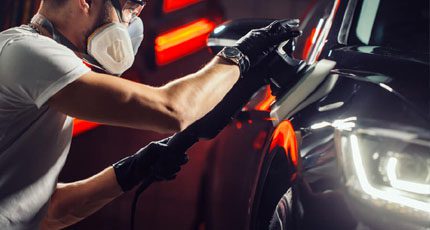
Clay Bar Treatment in Houston: What It Is and Does Your Car Need One?
A clay bar treatment lifts the gritty, bonded contaminants that Houston's air, highways, and humidity press into your paint, leaving a glass-smooth finish that wax and ceramic coatings can actually grip.
A clay bar treatment is a paint decontamination step that pulls bonded grime, brake dust, rail dust, and industrial fallout off your clear coat. In Houston's humid, high-pollen, highway-heavy climate, most cars benefit once or twice a year, especially before applying wax, sealant, or ceramic coating.
If your car still feels rough after a thorough wash, a clay bar treatment in Houston is almost certainly what it is missing. Washing removes loose dirt that sits on top of the paint, but it cannot remove the microscopic particles that bond to your clear coat over months of Gulf Coast driving. Those embedded contaminants are what make paint feel like fine sandpaper, dull the shine, and stop protective products from bonding correctly. Claying is the fix.
What exactly is a clay bar treatment?
A detailing clay bar is a soft, engineered resin that glides across a lubricated surface and grabs anything raised above the smooth plane of your paint. As the clay passes over a bonded particle, it shears that particle off the clear coat and traps it inside the clay. The result is a surface that feels perfectly slick under your fingertips. It is a mechanical decontamination process, not a chemical one, which is why it removes things that even a strong wash leaves behind. Clay also works on glass, smooth plastic trim, and chrome, not just painted panels.
Why do Houston cars get contaminated so fast?
The Gulf Coast environment is hard on paint. Houston combines heavy interstate traffic, refinery and industrial activity, year-round pollen, love bug season, and constant humidity that keeps fallout stuck to your finish. Brake dust from stop-and-go traffic on I-10 and 610, rail dust near industrial corridors, tree sap, and airborne industrial particles all settle and bond. Add the region's hard water spots from sprinklers and quick rinses, and a car in Katy, Sugar Land, or Pearland can feel gritty just weeks after a wash. Heat and UV bake these contaminants on harder, making early removal important.
How do I know if my car needs claying?
The classic test is the plastic bag test. Wash and dry the car, slip your hand inside a thin sandwich bag, and glide your fingers lightly across a clean panel. If you feel bumps, roughness, or a sandpaper texture through the plastic, your paint is contaminated and claying will help. Other tell-tale signs include orange or brown specks on white paint, a finish that looks dull even after washing, water that no longer beads well, and wax or sealant that will not last. If you are prepping for a ceramic coating, claying is not optional, it is required for proper bonding.
What is the difference between washing, claying, and polishing?
These three steps are often confused, but each does a distinct job. Washing removes loose surface dirt, dust, and road film. Claying removes bonded contaminants that sit raised on the clear coat but are stuck fast. Polishing, or paint correction, removes a tiny layer of clear coat to erase swirl marks, scratches, and oxidation. A clay bar does not remove scratches and a wash does not remove bonded fallout, so they are complementary rather than interchangeable. For a deeper restoration, claying is the prep step that comes before polishing and protection.
| Step | What it removes | What it does NOT do |
|---|---|---|
| Wash | Loose dirt, dust, road film | Bonded fallout, scratches |
| Clay bar treatment | Bonded contaminants, rail dust, fallout, overspray | Swirls, scratches, oxidation |
| Polish / paint correction | Swirl marks, light scratches, oxidation | Embedded surface contaminants |
| Wax / sealant / ceramic | Nothing, it protects | Existing defects or grime |
What are the steps in a professional clay bar treatment?
A proper clay treatment is methodical, and rushing it risks marring the paint. Here is how our Houston mobile team approaches it.
Does a clay bar damage your paint?
Done correctly, no. The risk comes from claying without enough lubricant, using too much pressure, or continuing to use a bar that has been dropped and picked up grit. Any of those can leave fine marring. That is exactly why a mobile professional with the right products and a careful technique is worth it. According to the International Detailing Association, surface preparation like decontamination is a foundational detailing skill, and proper technique is what separates a flawless result from accidental swirls. We carry fresh clay, quality lubricant, and the experience to read each panel.
How often should Houston drivers clay their car?
For most daily drivers in the Greater Houston area, once or twice a year is the sweet spot. Cars parked outdoors, driven on the freeways daily, or kept near industrial zones in places like Pasadena or the Ship Channel area may need it more often. Garage-kept vehicles that are washed regularly can sometimes stretch longer. The plastic bag test is your best guide. A practical rhythm for Houston is to clay in spring after pollen and love bug season, then again in fall before the cooler, wetter months, applying fresh protection each time. Regular care also protects long-term value and keeps the clear coat healthy. The EPA notes that proper vehicle washing and surface care can also reduce harmful runoff when done responsibly, another reason a controlled mobile service beats hosing contaminants into the street.
Why book a mobile clay bar treatment in Houston?
Claying takes time and a clean, controlled setting, which is exactly what mobile detailing delivers. King's Mobile Car Detailing brings the entire process to your driveway anywhere in Houston and surrounding suburbs like The Woodlands, Cypress, Spring, Katy, Sugar Land, and Pearland. You skip the drive, the wait, and the line at a wash bay. We arrive fully equipped, decontaminate your paint properly, and finish with the protection of your choice so the results actually last. With 20-plus years of experience and full insurance, you get a careful, professional job without leaving home.
"If I wash my car often enough, I never need a clay bar."
Washing only removes loose dirt. Bonded contaminants from Houston traffic and industry stay stuck until clay shears them off. Even spotless-looking paint can feel rough.
Clay bar treatment FAQs
How long does a clay bar treatment take?
For a full vehicle, claying alone typically takes one to two hours depending on size and how contaminated the paint is. As part of a full exterior detail with protection applied afterward, plan for a longer appointment. Our mobile team handles it all at your location.
Should I clay before a ceramic coating or wax?
Yes. Claying is essential before any protective product. Wax, sealant, and ceramic coatings bond to bare, smooth clear coat. If contaminants are still embedded, the product traps them and will not adhere or last properly.
Will a clay bar remove scratches or swirl marks?
No. Clay removes bonded surface contaminants only. Scratches, swirl marks, and oxidation live in the clear coat itself and require polishing or paint correction, which is a separate service we also offer.
Is claying safe for ceramic-coated cars?
It can be, but it should be done gently and only when needed, since aggressive claying can wear a coating. For coated vehicles we assess first and use the lightest effective method. When in doubt, call us and we will advise.
Do you come to my home or office in the Houston area?
Yes. King's Mobile Car Detailing is fully mobile. We come to you anywhere in Houston and the Greater Houston area, including Katy, Sugar Land, The Woodlands, Pearland, Cypress, and Spring, often the same day.
Ready for glass-smooth paint? We come to you anywhere in Houston.
Book a mobile clay bar treatment and exterior detail at your driveway. Same-day service is often available across the Greater Houston area.
Serving Houston and the Greater Houston area, King's Mobile Car Detailing is ready when you are. Call or text 346-641-0444 or reach out here to book your clay bar treatment today.
